Social Content Machine
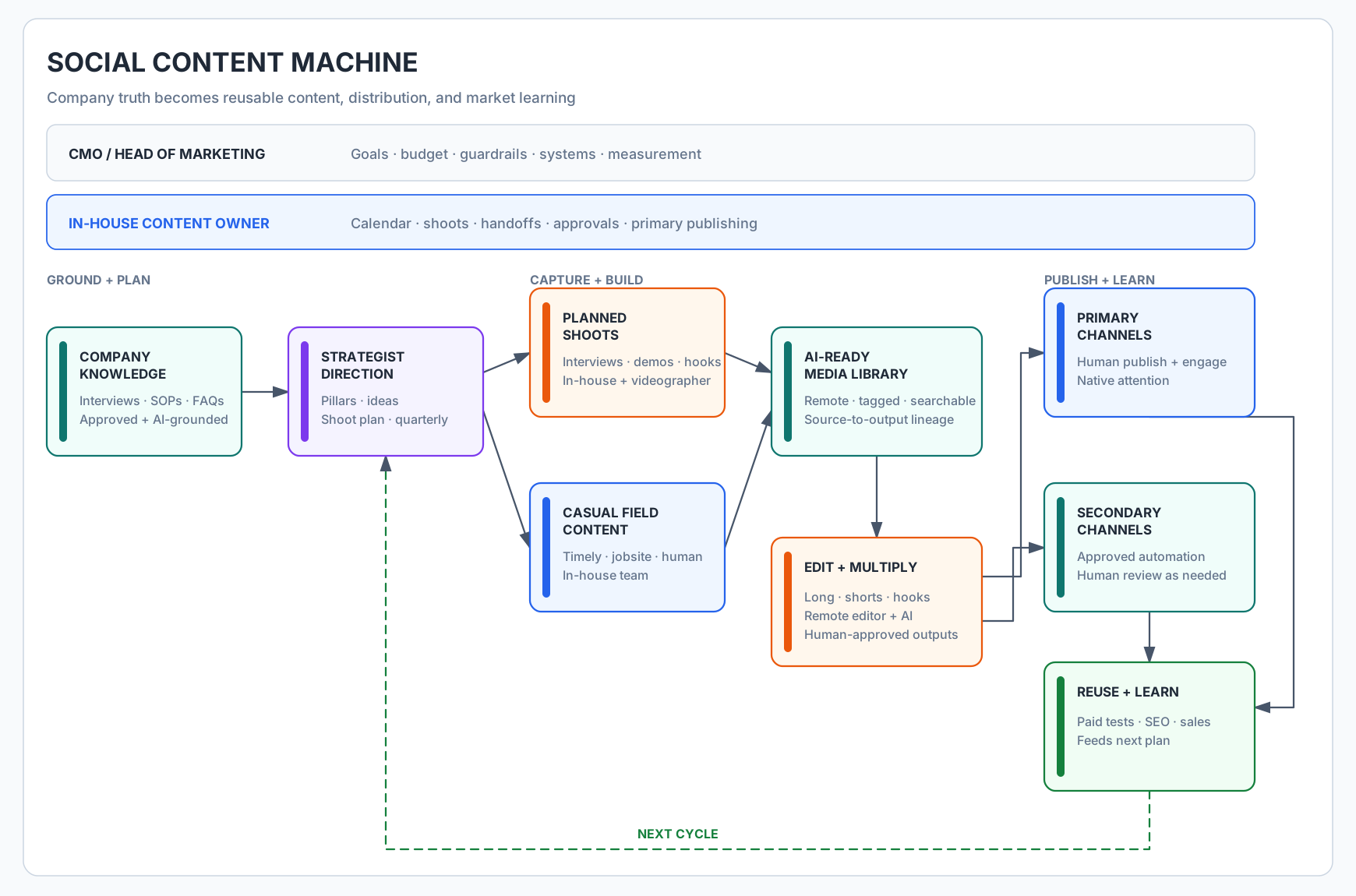
A social content machine is a company-owned knowledge-to-market system. It turns real expertise, people, and work into a dependable content pipeline without requiring every capability to be a separate employee.
The company keeps ownership of its calendar, access, approvals, media, and audience relationships. A strategist designs the system and sets direction. An in-house owner keeps it moving. Production partners provide craft. Paid, SEO, automation, and analytics connect to the system without quietly taking it over.
Open the editable Excalidraw source
The architecture
1. Ground the system in company truth
Interview owners, salespeople, project leaders, and other subject-matter experts. Organize approved services, FAQs, SOPs, cost and scope context, project examples, brand voice, company story, and recurring buyer questions into a maintained public-safe knowledge base.
This is what makes AI useful. It can retrieve and recombine what the company actually knows to help with ideas, interviews, scripts, hooks, and captions. Humans establish truth, point of view, claims, rights, and final approval.
2. Run two complementary content lanes
The strategist turns the knowledge layer into content pillars and periodic direction. The in-house owner turns that direction into a working calendar and coordinates:
- Planned production: interviews, explainers, demonstrations, and produced concepts captured efficiently.
- Casual field content: timely jobsite moments, observations, quick answers, and useful trends captured as work happens.
The planned lane creates depth and consistency. The casual lane keeps the company current and human. AI-generated scripts are scaffolding; speakers and creators adapt them into their own voice.
3. Capture once and organize for reuse
Each planned shoot should create reusable source material: complete explanations, multiple shorts, alternate hooks, supporting footage, ad candidates, transcripts, and possible inputs for search, email, or Sales.
Footage enters a company-controlled, remotely accessible media library instead of living across phones, drives, and message threads. Assets retain context, rights, transcript, status, and lineage. The same stable source ID follows an asset into organic posts, paid variants, platform records, and performance reporting.
4. Publish with different levels of human attention
Humans publish, respond, and engage on primary channels. AI helps adapt approved material. Automation may distribute approved, platform-appropriate versions to secondary channels when the source, claim, channel, and adaptation rules are already bounded.
A named human must be able to pause distribution without vendor help. The rules need review when the channel, offer, audience, rights, or claim type changes.
5. Return response to the next plan
Comments, Sales questions, content performance, and lead quality feed the next cycle. When paid social is active, its accountable owner turns promising observations into paid hypotheses, connects results to qualified-outcome evidence, and returns specific direction for the next hooks, visuals, offers, destinations, and briefs.
The machine learns from the market instead of simply filling a posting calendar.
Here, creative intelligence means the shared view connecting a content idea and source asset to organic response, paid testing, Sales feedback, qualified outcomes, and the next brief. It helps the different owners learn together without pretending every channel has the same job.
Who owns what
| Seat | Accountability |
|---|---|
| Social Strategist | Front-loaded system design, knowledge organization, pillars, channel roles, shoot direction, creative-intelligence requirements, and periodic review |
| In-House Content Owner | Calendar, knowledge upkeep, scripts, shoots, casual capture, handoffs, approvals, primary publishing, engagement, and daily continuity |
| Production partners | Professional capture, editing, requested variants, source-file return, and technical quality |
| Performance media partner | Paid hypotheses, paid-data interpretation, tests, scale/hold/retire decisions, and paid next-brief recommendations |
| Marketing / technical owner | Tools, integrations, asset IDs, CRM joins, access, data plumbing, recovery, and client isolation |
| Sales and subject-matter experts | Real questions, expertise, project access, objections, fit, and lead-quality feedback |
These are operating handoffs, not necessarily HR reporting lines. The strategist is deliberately front-loaded; the in-house owner is the operational center. Use the full Social Content Roles and Handoffs definition when assigning or hiring these seats.
What good looks like
The system is working when:
- approved company truth is findable and current;
- planned and casual lanes both have a realistic owner;
- source media, rights, consent, and lineage survive handoff;
- the company can continue if a partner leaves;
- primary channels remain human and responsive;
- paid and Sales learning returns to the next brief; and
- the strategist is not required for daily execution.
Watch useful source coverage, sustainable publishing, reuse per capture, audience response, Sales use, qualified inquiries, and time from observation to the next useful brief. Avoid universal posting targets.
Approvals, rights, account access, source lineage, and review boundaries deserve attention before automation expands. If output rises but useful learning does not, revisit the system rather than filling a larger calendar. Use Video Asset Management and Source-Led Repurposing for the production handoffs.